
Goshen Directory Shelves by Year
The Goshen Public Library Indiana Room has the broadest documented local run. Its catalog lists individual Goshen volumes from 1883 through 1997, with gaps, followed by combined Elkhart and Goshen directories from 1998 through the current year. The Indiana State Library holds selected Goshen editions, while a freely digitized Kramer volume supplies an early searchable example. Record the exact year, publisher, and shelf or digital item. A broad citation to a "Goshen directory" hides the gaps and makes later checking hard.
| Collection | Years | Where Held | Access |
|---|---|---|---|
| Goshen city directories | 1883-1997, listed years only | Goshen Public Library Indiana Room | In person; targeted help by mail or email |
| Combined Elkhart/Goshen volumes | 1998-current | Goshen Public Library Indiana Room | Library access |
| Selected Goshen editions | 1897-1996, selected years | Indiana State Library | Catalog and reference desk |
| Kramer Elkhart and Goshen directory | 1885-1886 | Internet Archive | Free scan, PDF, and OCR |
The local list names 1883, 1890, 1897, 1908-1909, 1912, 1921, 1925, 1927, 1929, 1933, 1939, 1941, 1946, 1948, many editions from 1951 through 1980, and 1982-1997. A missing year is a shelf gap, not proof that someone left Goshen. Check the year on each side, then use census film or newspapers.
Goshen City Directory Research Desk
The Indiana Room is at 601 South 5th Street, and its Reference Desk accepts focused local-history and obituary questions by mail or email. Posted hours differ by day: Monday, Wednesday, and Thursday run 10 a.m. to 8 p.m.; Tuesday runs 1 p.m. to 8 p.m.; Friday closes at 6 p.m.; Saturday closes at 4 p.m.; Sunday is closed. Call 574-533-9531 before a long visit.
The same room holds census microfilm, plat books, cemetery indexes, yearbooks, county histories, and Sanborn maps. It also provides a microfilm reader and printer. These nearby tools turn a city directory hit into a sound family-history lead instead of leaving it as one unexplained name.
The library's genealogy collection page shows cemetery, funeral-home, marriage, naturalization, and Amish directory resources that can fill a missing volume year.

The captured page makes clear that the historical shelf reaches far beyond printed directories, which is useful when an entry disappears between editions.
Goshen's Kramer Directory Online
The digitized 1885-86 Kramer directory is the strongest free online example. It contains a Goshen title page, an abbreviation key, directory entries, business listings, and searchable OCR. OCR means computer-read text taken from the scan. It can speed a name search, but old type and short abbreviations can produce errors, so inspect the page image.
The scan preserves the page layout that OCR can flatten. It also shows why a compass side or cross street must be copied exactly before matching an old address to a modern map.
Reading Goshen Directory Entries
A Kramer line may name a person or business, show an honorific or work role, identify an employer or partnership, and describe a residence. Some homes appear by street and number. Others use forms such as west side, northwest corner, near, or opposite. The publication year is only a snapshot; it is not an exact move date.
| Name | Surname, given name or initial, and sometimes an honorific or status |
|---|---|
| Role | Occupation, title, employer, or partnership |
| Residence | Street number when present, or compass side and cross-street wording |
| Context | Business entries may name principals rather than household occupants |
| Date | The volume year, which marks a publication snapshot |
- Criss-cross directory
- A later directory section arranged by street and address rather than surname.
- Householder index
- A list organized around the named person responsible for a household entry.
- Abbreviation key
- The volume's own code list. In Kramer, terms include res, rms, bds, cor, nr, opp, and compass letters.
Expand each code in research notes. For example, bds means boards, while cor means corner. Never force a directional location into a modern house number without support from a plat, Sanborn sheet, or later directory.
Goshen Names Beyond Directories
Goshen newspapers on library microfilm span 1837-2022. The obituary tools are separate: a card file covers 1970-1994, Reference Desk index support covers 1994-2007, and the Goshen News Index covers 2007 to the present. Treating them as one unbroken database could hide a needed staff lookup.
Yearbooks add another name trail. The Indiana Room holds Goshen High School, Bethany Christian, and Goshen College yearbooks. In-library Ancestry Library supports census and other historical searches; cardholders can use HeritageQuest remotely. NewspaperARCHIVE supplies a name, place, and year search. These are discovery tools, so verify a match against the scan or record keeper.
The Goshen Library online-resources page identifies the licensed databases and their access limits.
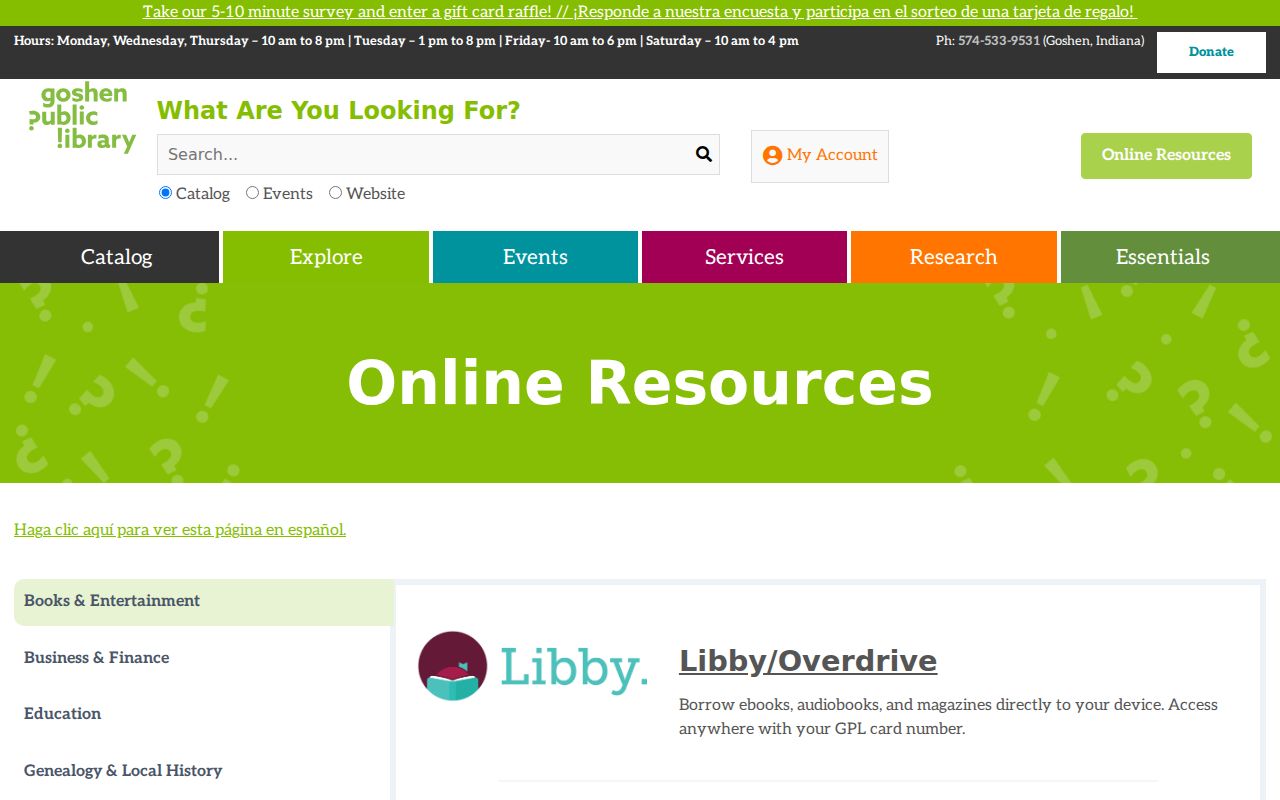
This resource list helps choose the next source by question, instead of repeating the same surname search in tools that cover different years.
Goshen Mennonite Historical Collections
The Mennonite Historical Library and Goshen College Archives preserve a distinct institutional and faith-community trail. The MHL was founded in 1906 and focuses on Anabaptist, Mennonite, Amish, Hutterite, and related records. College archives include correspondence, publications, and student or alumni organization records. On-site work is encouraged because more material is available there than staff can identify through correspondence.
The MHL researcher information notes microfilm readers, a photocopier, varying fees, and special hours by arrangement at 574-535-7418.
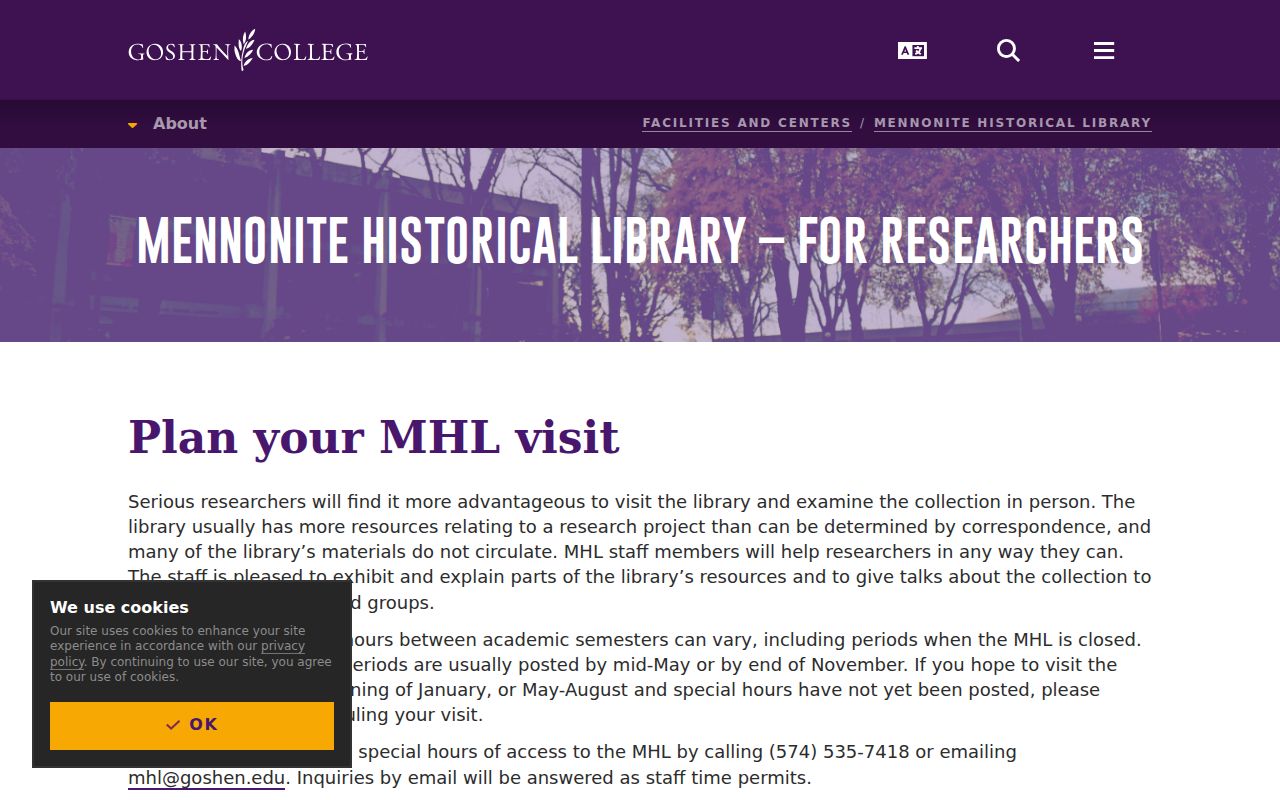
The facilities and access rules matter when a college, church, or Plain-community name is absent from a standard city directory.
Goshen Bulletin Name Trail
Goshen College announced in January 2026 that its entire Bulletin archive, dating from 1903, had been digitized through a partnership with the Internet Archive. The issues are text-searchable. That makes the archive useful for alumni, faculty, campus events, and institutional names that may never appear in a county people index.
The college digitization announcement explains both the date range and online access.
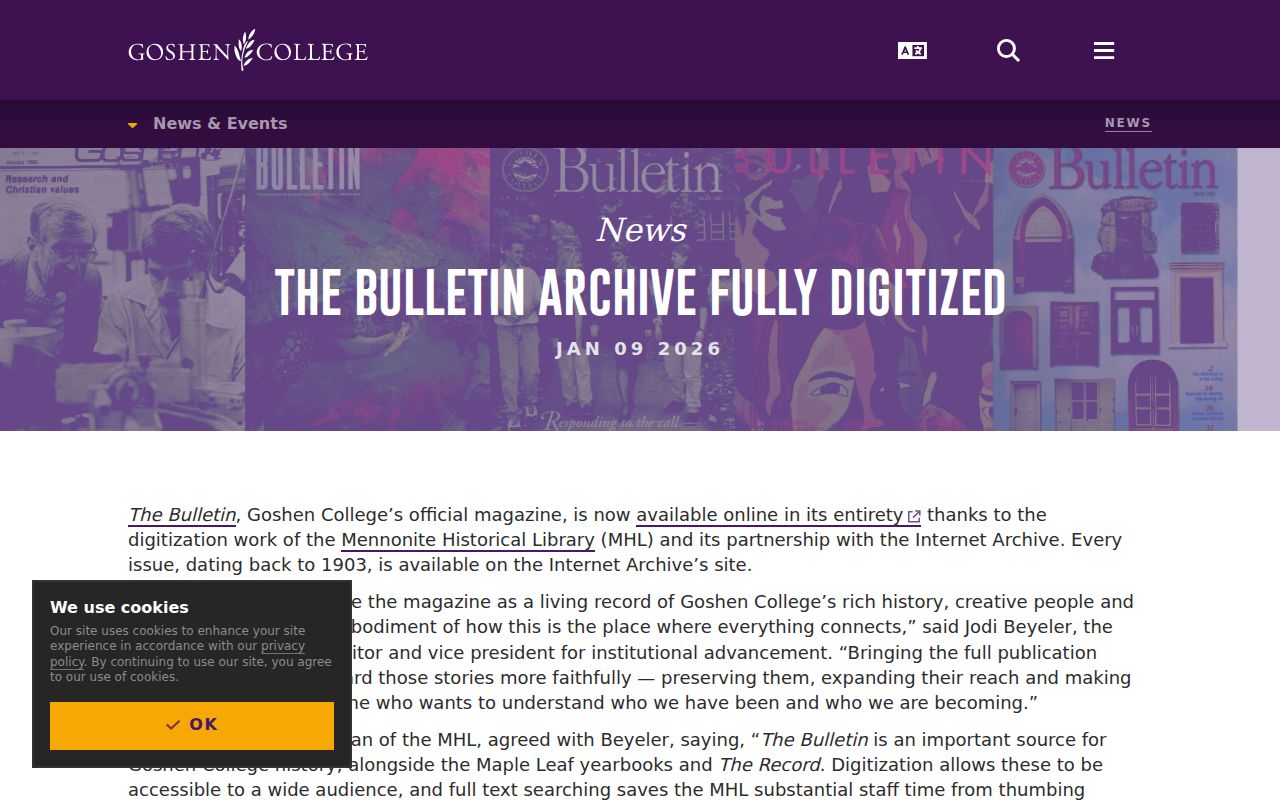
A Bulletin result can establish a campus tie, but a directory, yearbook, or newspaper should confirm that it is the right person.
Mapping Old Goshen Directory Addresses
Goshen Sanborn editions are documented for 1886, 1892, 1896, 1901, 1905, 1910, 1917, 1926, and 1926-1945. These maps show block form, building use, construction material, streets, sidewalks, and property lines. They do not identify residents. Their value is geographic: a Sanborn sheet can explain where a directory's directional address sat before modern numbering.
The 1917 Library of Congress set contains 17 sheets. Plat books at the Indiana Room cover selected years from 1892 through 1996. Keep the directory name and map evidence separate in notes, then connect them only when the year, street, and building location agree.
Goshen Directory Record Timeline
The directory shelf grew beside county, newspaper, map, and college collections. A short timeline shows which source can fill a quiet period.
| Year | Goshen research milestone |
|---|---|
| 1830 | Elkhart County was created, with Goshen as county seat. |
| 1837 | The library's Goshen newspaper microfilm run begins. |
| 1883 | The local library lists an early Goshen directory volume. |
| 1885-86 | Kramer's Elkhart and Goshen volume records directional addresses. |
| 1906 | The Mennonite Historical Library was founded. |
| 1998 | Combined Elkhart/Goshen directories begin in the documented local run. |
| 2026 | The 1903-forward Bulletin archive becomes fully digitized. |
Trace Families Through Goshen Directories
Start from one sound fact, such as a full name, spouse, street, school, church, or known year. Follow the entry on both sides of that date. Each city directory is one piece of evidence, not a full household count.
- Find the first likely entry and copy the name, role, address wording, page, publisher, and year.
- Check the nearest earlier and later available volumes. Note a move, spelling change, new role, or disappearance without assuming why it happened.
- Use a street-ordered section when available. For a modern address workflow, shift to the Goshen street directory.
- Pair the address with the nearest federal census year, then inspect newspapers, yearbooks, or church records for context.
- Close a possible death trail with the correct obituary era, cemetery book, funeral-home index, probate file, or vital index.
A missing name can mean a move, death, omitted listing, changed surname, or an unavailable year. For a common surname, add a middle initial, spouse, employer, church, cemetery, or cross street. Confirm each identity with an independent record before joining two entries into one life story.